
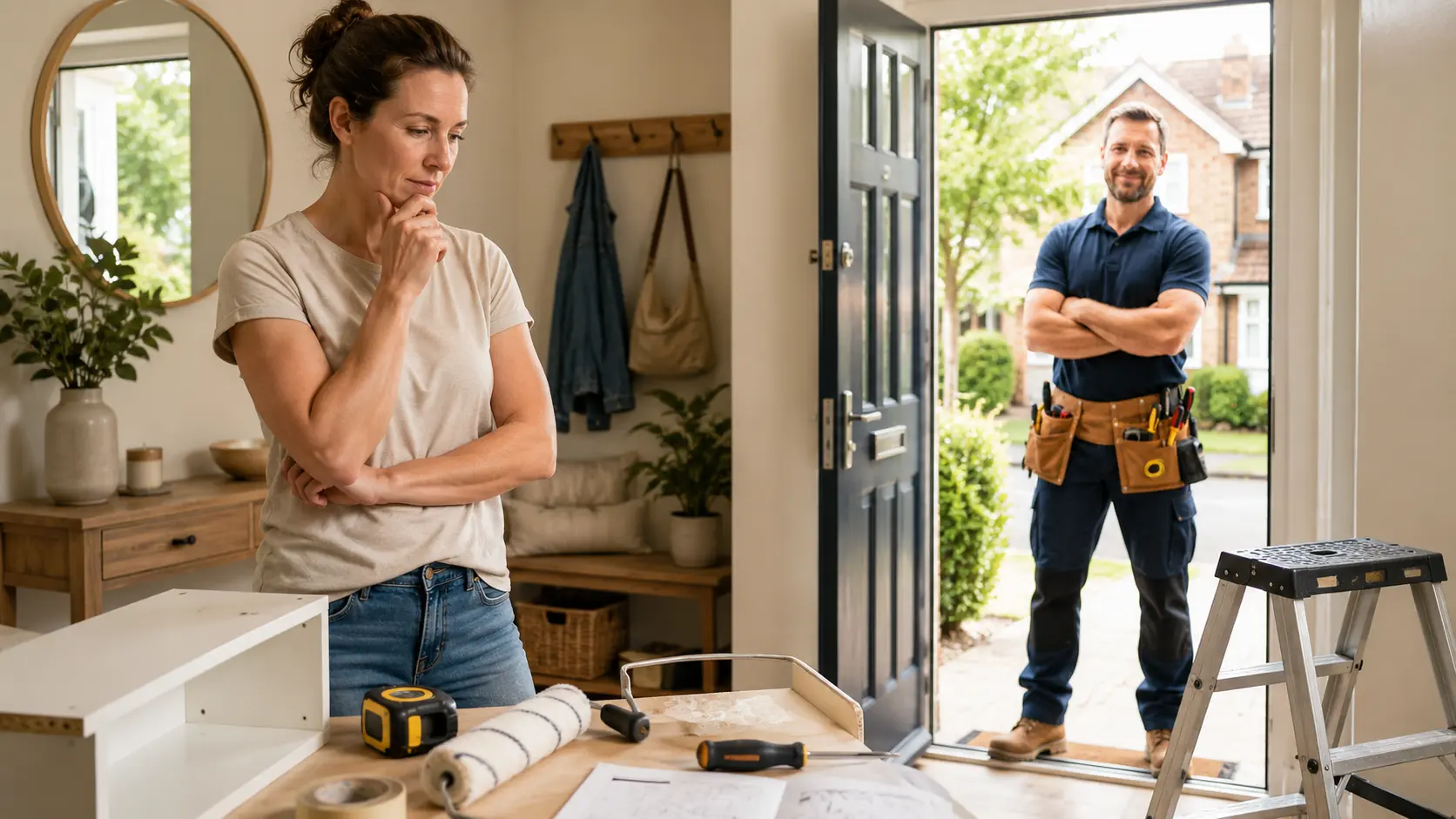
The DIY instinct is strong — and for good reason. Doing work yourself saves money, gives you control, and can be genuinely satisfying. But the calculation is more complex than it first appears, and in some cases, DIY is not just inadvisable but illegal. Here is how to make the right call.
Need a tradesperson for this?
Bizzy Day lets you search available UK tradespeople by trade, postcode, and date — free, no account needed.
Find a tradesperson — freeWork you legally cannot do yourself
The law is unambiguous on certain categories of work. Gas work on appliances and pipework must be carried out by a Gas Safe registered engineer — it is a criminal offence to carry out gas work without registration. Electrical work in certain locations (kitchens, bathrooms, outdoors) must meet Part P of the Building Regulations, which typically requires a registered electrician to either do the work or certify it.
Illegal DIY gas and electrical work
Beyond the legal risk, unlicensed gas work is a leading cause of carbon monoxide poisoning, explosions, and fire. And if you DIY electrical work that later contributes to a fire, your home insurance may be invalidated. The consequences extend well beyond any money saved.
The hidden cost of DIY
The true cost of DIY includes the tools you need to buy or hire, the materials (which tradespeople often buy at trade prices), the time you spend (which has a real value), the learning curve if you are doing something for the first time, and the cost of correcting mistakes. A DIY tiling job that takes three weekends and uses a third more tiles than expected is not necessarily cheaper than hiring a tiler.
Many homeowners underestimate the time a job takes by a factor of three or four — and then underestimate the cost of their own errors by the same margin.
— Federation of Master Builders
When DIY genuinely makes sense
DIY is a strong choice for work that: does not require specialist tools you do not have; has a low consequence of error; is straightforward enough to learn from a tutorial; and does not affect structural integrity, gas, electrics, or water supply. Painting and decorating, garden landscaping, laying laminate flooring, assembling flat-pack furniture, and minor plaster repairs are all jobs where a competent DIYer can do excellent work.
The insurance angle
Check your home insurance policy before undertaking any significant DIY. Some policies require you to notify the insurer before structural work begins, or exclude claims arising from DIY that was not carried out to a professional standard. This is particularly relevant for electrical, plumbing, and roofing work.
- Painting, decorating, and wallpapering
- Garden landscaping and paving
- Laying laminate or engineered wood flooring
- Assembling furniture and flat-pack kitchens
- Minor plaster repairs and filling
- Replacing tap washers and basic plumbing fixes (not gas)