
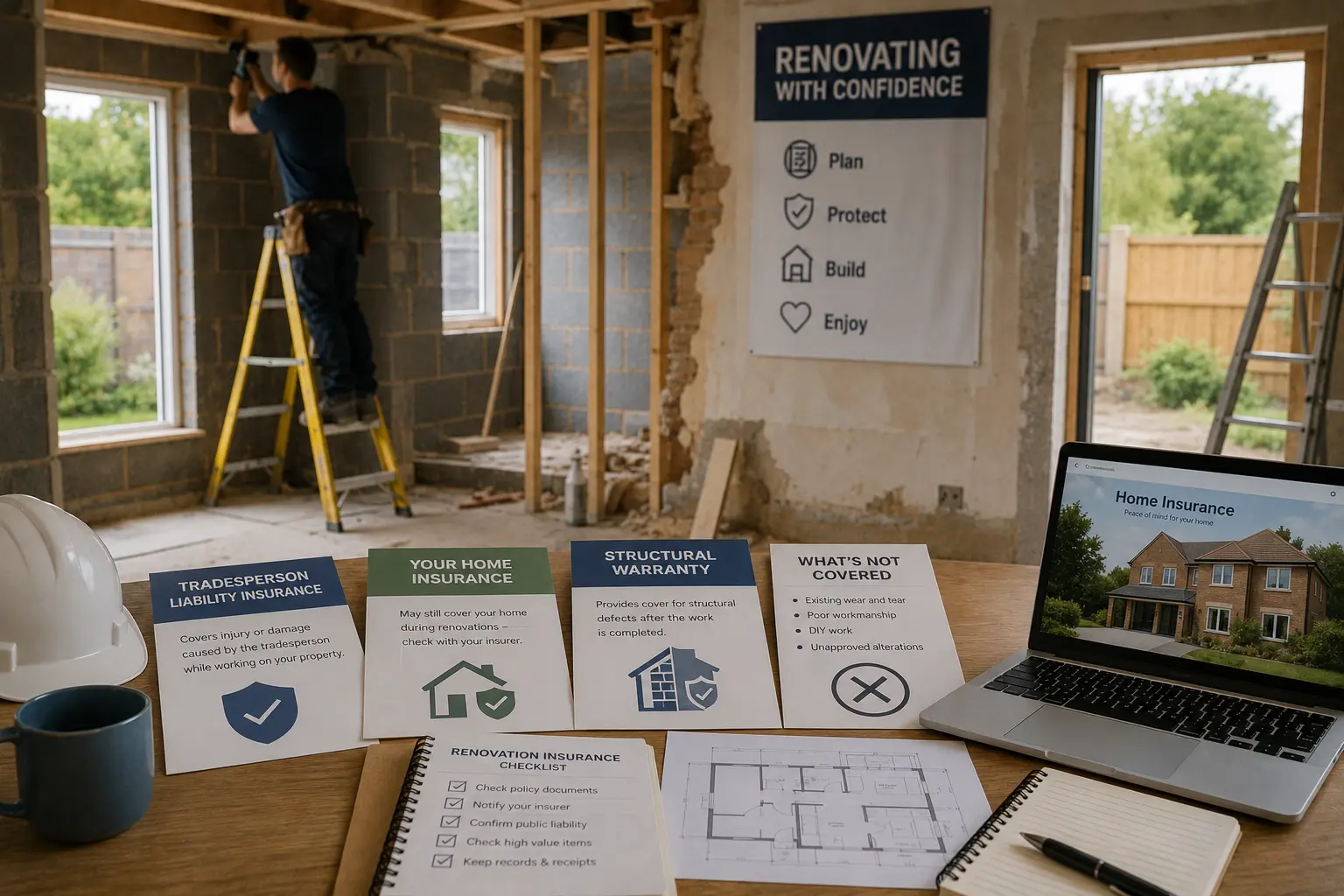
Insurance is one of the most overlooked aspects of home renovation planning. Many homeowners are surprised to discover that their standard home insurance may not cover building work, that their tradesperson's insurance may not cover what they expect, and that major structural work may require a structural warranty. Getting this right before work begins can prevent expensive gaps in cover.
Need a tradesperson for this?
Bizzy Day lets you search available UK tradespeople by trade, postcode, and date — free, no account needed.
Find a tradesperson — freeTradesperson public liability insurance
Any tradesperson working in your home should carry public liability insurance — this covers damage to your property or injury to third parties caused by their work. The minimum you should accept is £1 million of cover; £2-5 million is more typical. Always ask to see a copy of the certificate before work begins and check that it is current. Uninsured tradespeople leave you exposed to significant financial risk if something goes wrong.
Notifying your home insurer
Most home insurance policies require you to notify your insurer before beginning significant building works. Failure to do so can invalidate your policy — even for events entirely unrelated to the renovation. What counts as "significant" varies by policy, but structural alterations, extensions, and conversion works almost always fall within notification requirements. Your insurer may apply additional conditions or a temporary exclusion during the build period.
Failure to notify your home insurer of building works is one of the most common reasons renovation-related claims are declined. Always check your policy and notify in writing before work begins.
— Association of British Insurers
Self-build and renovation insurance
For major projects, a dedicated self-build or renovation insurance policy provides cover specifically designed for properties under construction. These policies typically cover: the building works themselves against damage, public liability for the project, employers' liability if you are directly hiring subcontractors, and legal expenses. Providers include BuildStore, Buildzone, and Protek.
Structural warranties (latent defect insurance)
For extensions and new builds, a structural warranty (sometimes called latent defect insurance) provides 10-year cover against structural defects caused by design or workmanship errors. NHBC Buildmark is the most widely known, but independent warranties from providers including Build-Zone and Premier Guarantee are also accepted by most mortgage lenders. Without a structural warranty, you may have difficulty selling or remortgaging the property in the future.