
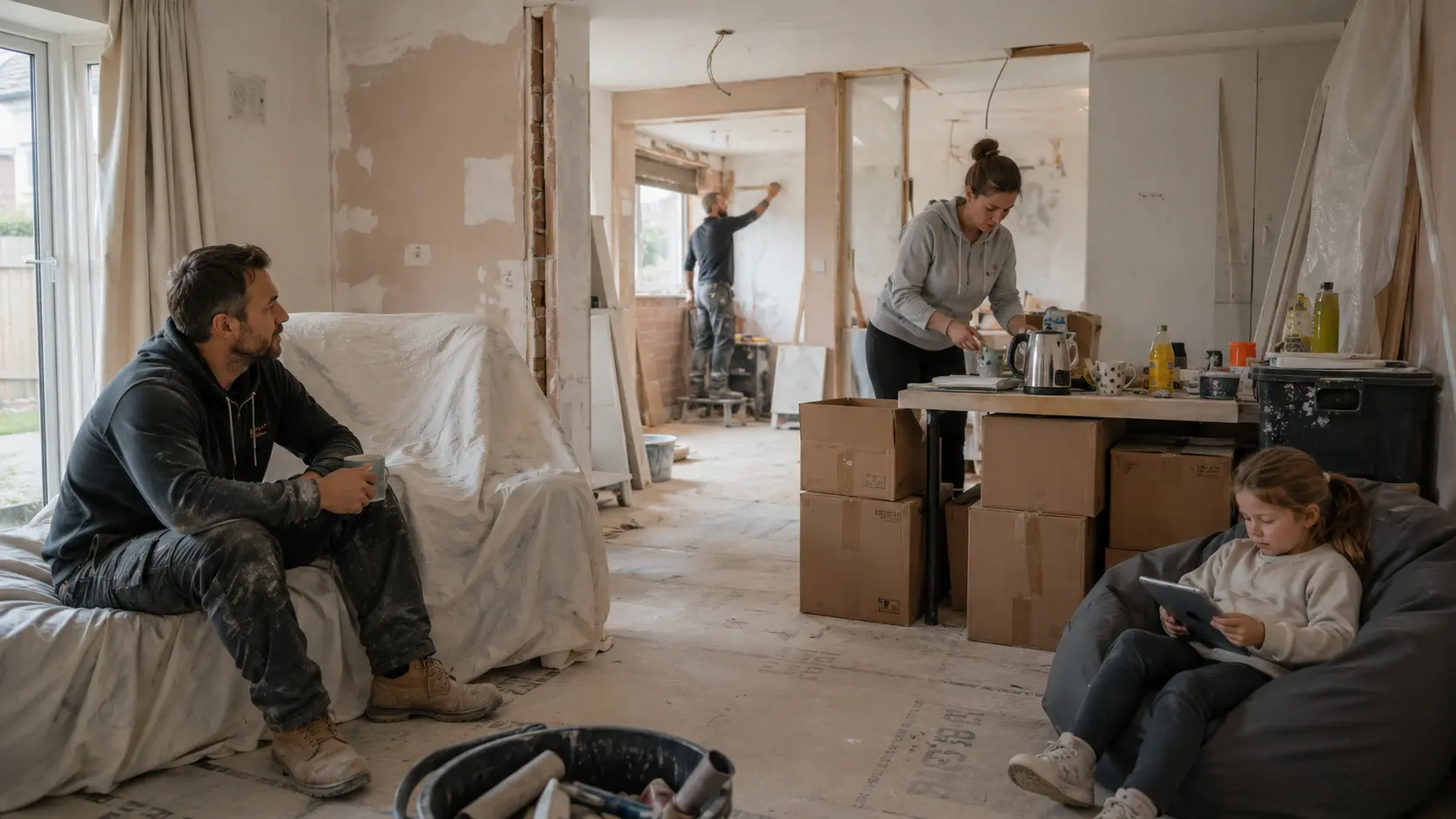
Choosing to stay in your home during a major renovation saves money but tests your patience. Dust gets everywhere, noise starts at 8am, the bathroom disappears for a fortnight, and your home stops feeling like a refuge. The homeowners who manage it best are those who plan for the disruption in advance, rather than being surprised by it.
Need a tradesperson for this?
Bizzy Day lets you search available UK tradespeople by trade, postcode, and date — free, no account needed.
Find a tradesperson — freeZone your home before work starts
Before any work begins, identify which parts of your home will remain liveable throughout the project and which will be the construction zone. Set physical boundaries — dust sheets across doorways, temporary walls of polythene sheeting, clear routes between working and living areas. The goal is to keep dust and debris contained. Good builders will do this themselves, but not all do — establish the expectation in your initial conversations with your contractor.
Dust — the underestimated enemy
Construction dust is pervasive in a way that most people do not expect until they experience it. Fine dust from sanding, drilling into plaster, or cutting masonry can travel through an entire house via ventilation gaps and under doors. It settles on every surface, works into electronics, and takes days to fully clear. Invest in proper dust barriers — heavy-duty polythene on a timber frame across doorways, taped at all edges — and a HEPA-filter vacuum or air purifier in the rooms you are living in. Remove or cover anything valuable before work starts.
Most homeowners underestimate the dust by a factor of ten. What you think will stay in the kitchen reaches the loft. Proper dust containment is not optional — it is the single most important thing you can ask your contractor to prioritise.
— Federation of Master Builders
Managing without a kitchen or bathroom
If your kitchen is being renovated, set up a temporary kitchen elsewhere — a camping stove, a microwave, a kettle, and a small fridge in the dining room or garage. Buy an electric hot plate. Meal planning and batch cooking before the kitchen goes become valuable habits. If your main bathroom is being refitted, establish a clear timeline with your contractor for when it will be unusable — typically 5-10 working days for a full refit — and plan accordingly: a gym membership, staying with family for part of the period, or scheduling the refit around a planned holiday.
The noise — setting expectations
Construction noise starts early and runs all day. Most local authorities allow construction work from 8am to 6pm on weekdays and 8am to 1pm on Saturdays. This is legal, but it means your working-from-home days will be disrupted. Noise-cancelling headphones are worthwhile. So is being honest with yourself about which days you will need to work elsewhere. If you have children who nap or elderly relatives in the house, have a frank conversation with your contractor about particularly noisy operations.
Mental health and the long haul
A major renovation lasting 3-6 months is genuinely stressful to live through. The combination of financial pressure, disruption to daily routine, and a home that does not feel like home takes a toll. Set yourself milestones to celebrate. Get out of the house on weekends. Make time for the things that restore you — exercise, social time, time away from the building site. The homeowners who come through renovations well are those who manage the emotional side as consciously as they manage the build.
Agree working hours before you start
Before work begins, agree with your contractor what time tradespeople will arrive, what time they will leave, and how they will manage access if you are not home. Having people arrive unexpectedly at 7am when you are working from home is avoidable with a five-minute conversation at the outset.
- Create physical dust barriers before work starts — not after
- Set up a temporary kitchen if the main one will be out of action
- Plan for bathroom downtime with specific dates agreed in advance
- Agree start and finish times, and access arrangements, upfront
- Build in days away from the house during the most disruptive phases
- Track milestones and give yourself permission to celebrate progress