
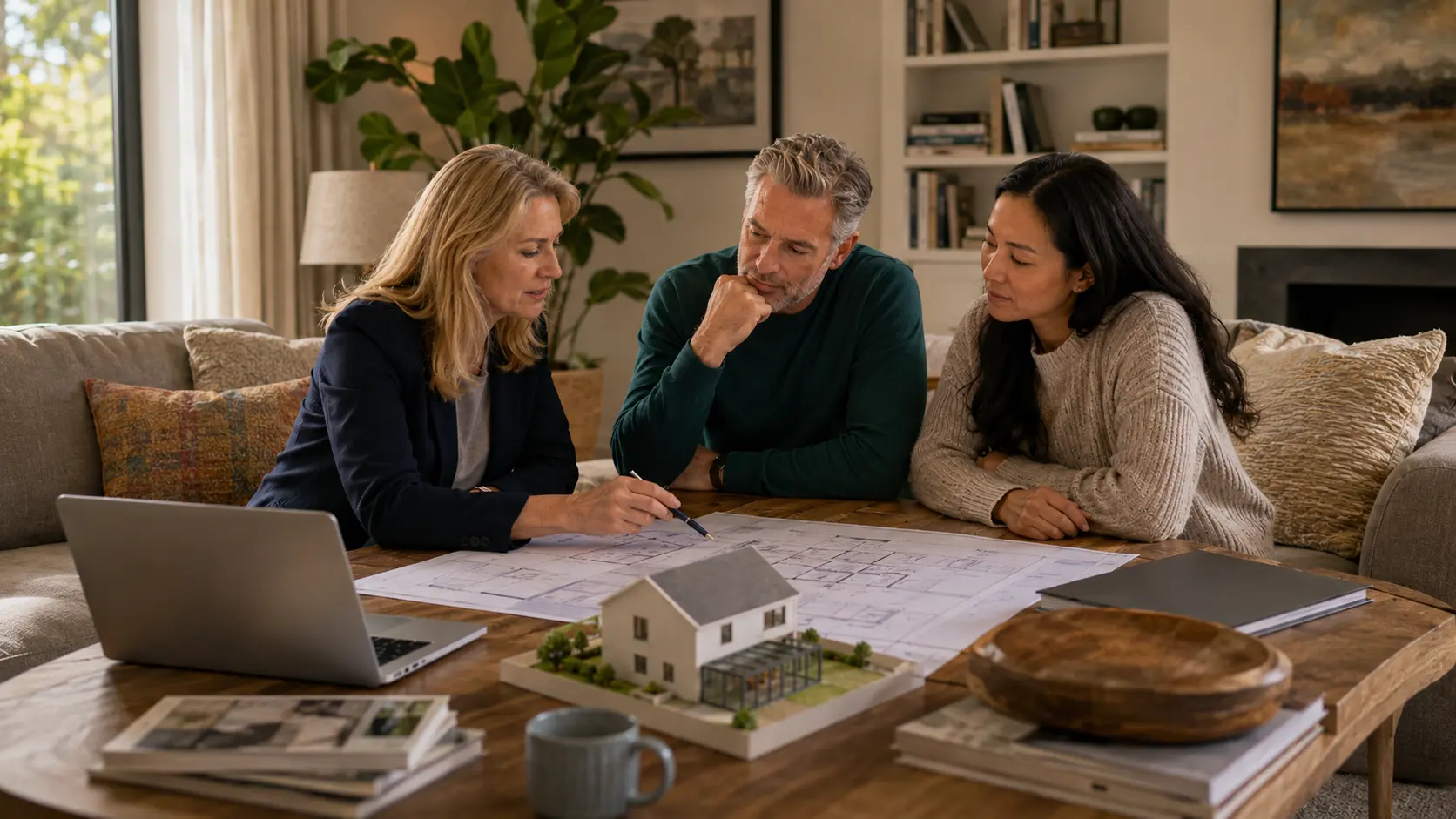
Planning permission is the system by which local authorities control development in their area. For most standard home improvements, you will not need it — but understanding when you do, and how the process works, can save you significant time, money, and legal risk.
Need a tradesperson for this?
Bizzy Day lets you search available UK tradespeople by trade, postcode, and date — free, no account needed.
Find a tradesperson — freeWhen you need planning permission
You need planning permission when your project exceeds permitted development rights, falls in a protected area (Conservation Area, AONB, National Park), or involves a material change of use. This includes most two-storey extensions, substantial changes to the exterior appearance of a dwelling, creating a new dwelling (including a self-contained annexe), and changes to listed buildings.
How to apply
Applications are submitted through the Planning Portal (planningportal.co.uk) or directly to your local planning authority (LPA). You will need: a site location plan, a block plan showing your property in context, existing and proposed floor plans and elevations, and a design and access statement for larger projects. For a householder application (the most common type for home extensions), the fee in England is currently £258.
Pre-application advice from the local planning authority is one of the most cost-effective investments a homeowner can make before submitting a formal application. It can save months of delay.
— Planning Portal, UK Government
Timelines
The statutory determination period for most householder applications is 8 weeks. More complex applications have a 13-week target. In practice, many LPAs take longer. The clock does not start until the application is validated — which requires all required documents and the correct fee. Invalid applications are a common cause of delay that can be avoided by reading the local authority's validation checklist carefully.
What happens if your application is refused
A refusal is not necessarily the end. You can appeal to the Planning Inspectorate (free for householder appeals), revise and resubmit (a second application for a revised scheme is free within 12 months in England), or seek pre-application advice on what changes would make the scheme acceptable. Many initial refusals result in approval after the scheme is modified.
Retrospective planning permission
If work has been carried out without planning permission where it was required, you can apply for a Lawful Development Certificate if the work is more than 4 years old (for dwellings), or a retrospective planning permission. Building without permission when required is a civil matter, not criminal — but it can result in an enforcement notice requiring demolition, and will emerge in property searches when you sell.
- Standard householder application fee: £258 (England, 2024)
- Determination target: 8 weeks for householder applications
- Appeals: free, through the Planning Inspectorate
- Resubmissions: free within 12 months of refusal
- Pre-application advice: typically £50-£300 depending on the LPA