
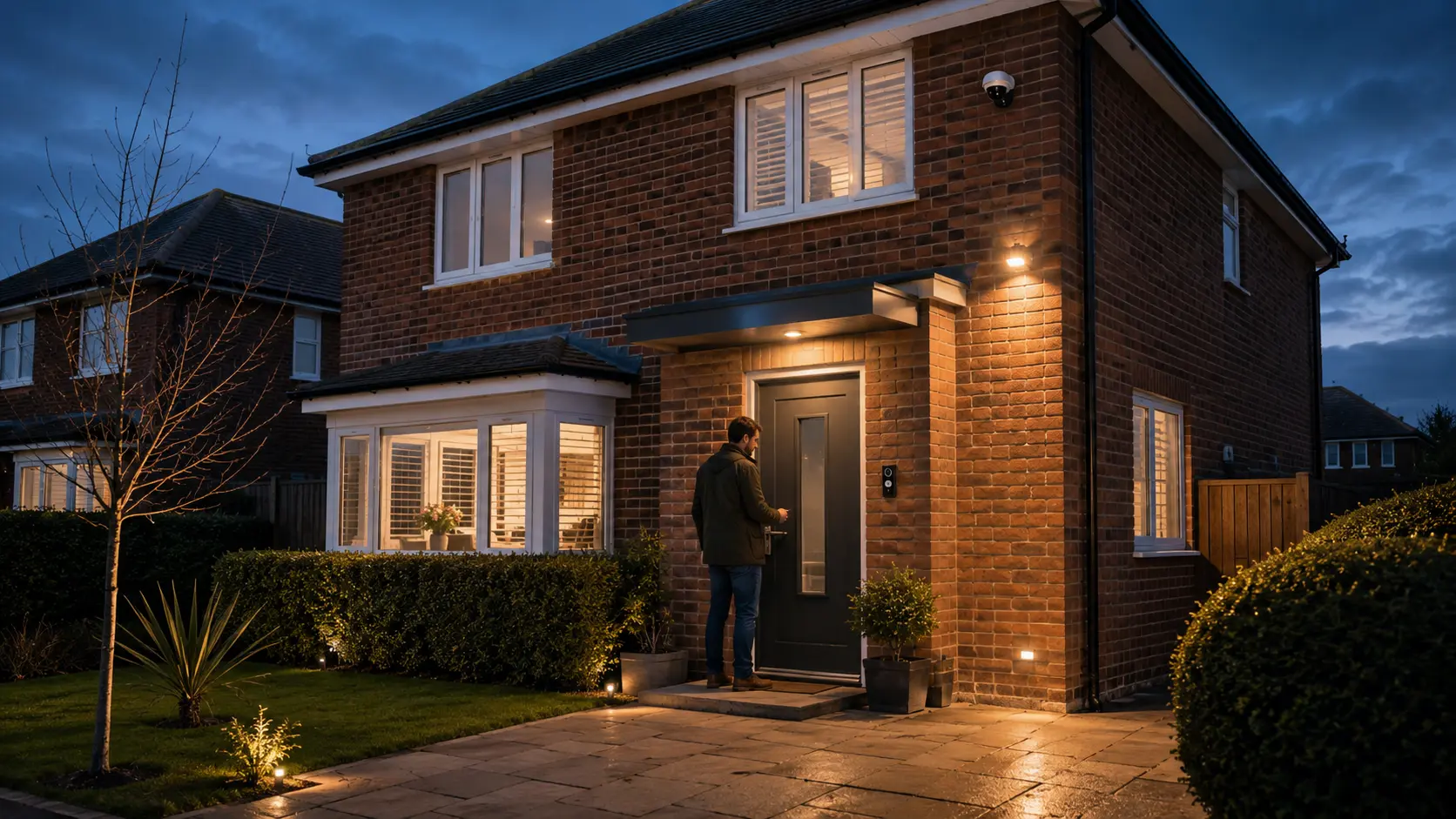
Most domestic burglaries in the UK are opportunistic — a burglar tries a door or window, finds it unlocked or easy to force, and is inside within seconds. The practical consequence is that relatively modest security improvements significantly reduce your risk. You do not need an expensive system; you need to remove the obvious opportunities.
Need a tradesperson for this?
Bizzy Day lets you search available UK tradespeople by trade, postcode, and date — free, no account needed.
Find a tradesperson — freeDoors — the primary entry point
Around 70% of domestic burglaries use a door as the entry point. The most common failure is a door that looks secure but has a weak cylinder lock that can be snapped. Anti-snap cylinders — conforming to TS007 3-star or Sold Secure Diamond standard — should be fitted to all external composite and uPVC doors. Dead bolts and hinge bolts on timber doors provide additional resistance. A multi-point locking system (standard on uPVC and composite doors) is significantly stronger than a single-point lock, but only if it is engaged — ensure the door is lifted into the frame and the mechanism is fully activated.
Windows
Ground floor and accessible upper floor windows are a common secondary entry point. Window locks should be fitted on all accessible windows. Key-operated window restrictors prevent windows from being opened wide enough to climb through while still allowing ventilation. For older sash windows, sash locks and frame bolts significantly improve security. Always ensure your window locks are actually used — an unfastened window can render a home insurance policy void following a break-in.
The most commonly exploited vulnerability is not the lock — it is human behaviour. Doors left unlocked while the owner is in the garden, windows left open overnight, keys left visible through letterboxes. Security hardware only works when it is used.
— National Crime Prevention Centre
Alarm systems
A visible alarm system is a deterrent even if it never activates. Professionally installed and monitored systems offer the highest level of protection — when triggered, a monitoring centre can dispatch a keyholders or police response. NSI Gold and SSAIB-approved installers meet the standard required by most home insurance policies for alarm-related discounts. Self-installed smart alarms (Ring, Yale, SimpliSafe) are easier to set up and cheaper, but may not meet insurer standards for premium reductions — check your policy.
Smart cameras and doorbell cameras
Video doorbell cameras (Ring, Google Nest, Yale) provide real-time video of your front door and can deter package theft and front-door burglaries. External cameras covering driveways, side gates, and rear gardens complete the picture. For evidence to be usable by police, footage should be retained for at least 30 days and the camera should capture a resolution sufficient to identify individuals. Inform neighbours if cameras have any coverage of public spaces or adjacent properties.
Lighting and visibility
Darkness provides cover. Motion-activated lights at the front, rear, and side of your property remove that cover and draw attention to movement. Well-lit gardens and pathways also make it harder for a burglar to work unobserved. Timer-controlled lights inside the house when you are away simulate occupancy — a visible TV glow or room lights on a variable timer are more convincing than fixed on/off timers.
- Replace standard cylinders with TS007 3-star anti-snap cylinders
- Fit hinge bolts and deadbolts on timber doors
- Lock all accessible windows — especially ground floor
- Install motion-activated external lighting front, rear, and side
- Use a registered alarm installer if insurer discounts matter to you
- Register with Neighbourhood Watch and report suspicious activity