
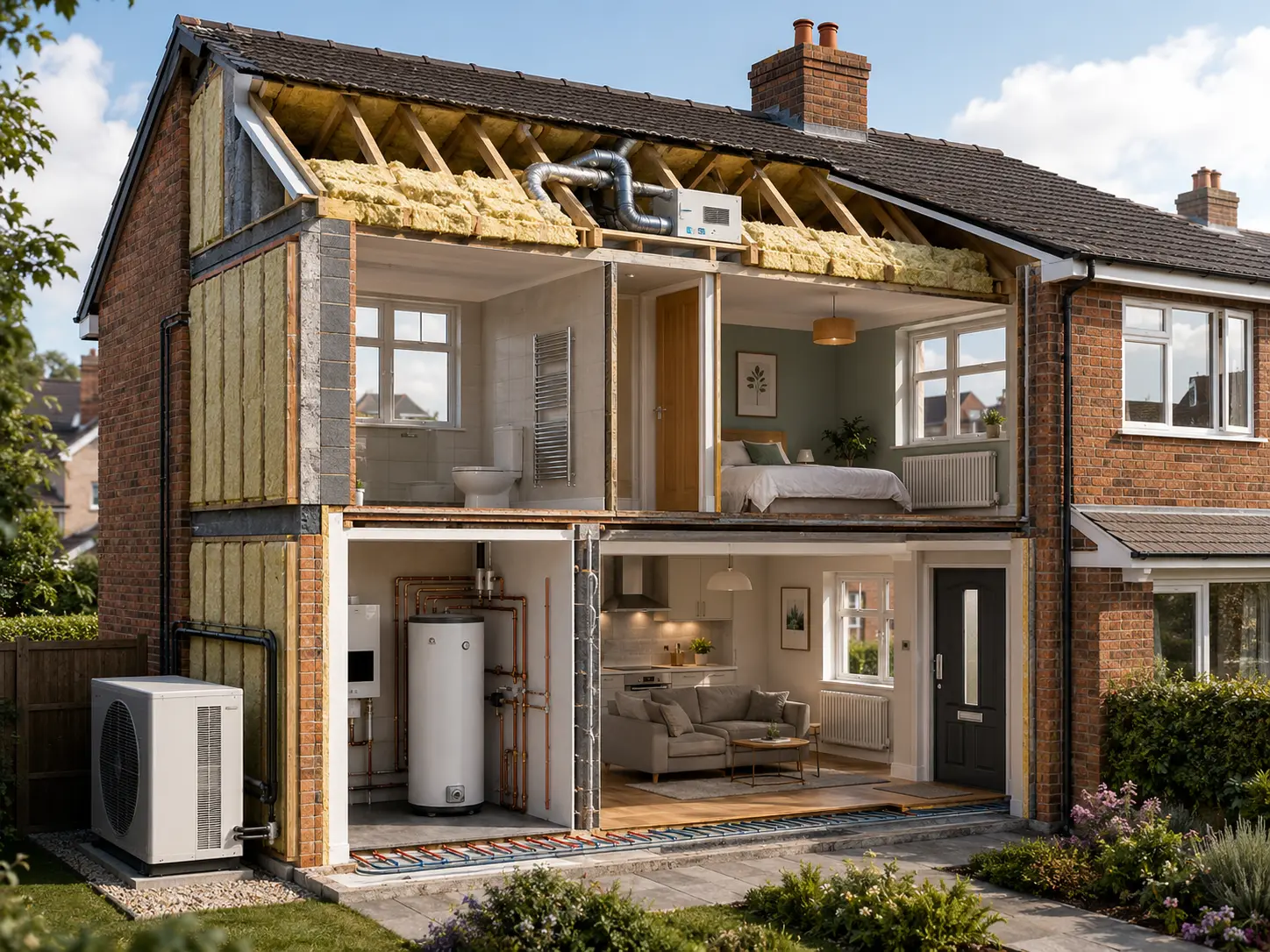
Retrofitting an existing home for energy efficiency is more complex than building a new one — the fabric is already fixed, there are constraints from structure and planning, and it is easy to create new problems by solving old ones. But done well, it can dramatically reduce energy bills, improve comfort, and significantly increase your home's value and EPC rating.
Need a tradesperson for this?
Bizzy Day lets you search available UK tradespeople by trade, postcode, and date — free, no account needed.
Find a tradesperson — freeStart with the fabric first
The right order matters. Before upgrading the heating system, maximise insulation and air tightness — this reduces the heat demand and allows a smaller, more efficient heating system to meet it. Loft insulation is the cheapest intervention (often under £500 for a standard house) and delivers significant returns. Cavity wall insulation is similarly cost-effective. External or internal wall insulation is more expensive but transformative in older solid-walled properties.
Windows and doors
Modern double glazing with a U-value of 1.2 W/m²K or better will outperform single-glazed windows by a significant margin. Triple glazing offers further improvement but with substantially higher cost for diminishing returns in most UK climates. Secondary glazing — a removable inner panel — is a lower-cost alternative particularly suited to Conservation Areas where replacing original windows may not be permitted.
The fabric-first approach — insulating before upgrading heating — is the most cost-effective sequence for retrofit. A poorly insulated home will defeat even the most efficient heating system.
— Energy Saving Trust
Ventilation: the critical balance
As homes become more air-tight through insulation upgrades, ventilation becomes critical. A draughty older house "breathes" naturally — an insulated one does not. Without adequate ventilation, moisture builds up leading to condensation, mould, and poor air quality. Installing mechanical ventilation with heat recovery (MVHR) in a well-sealed home recovers 80-90% of the heat from extracted air, maintaining both air quality and efficiency.
Government support
The Great British Insulation Scheme and ECO4 scheme offer free or subsidised insulation to eligible households. The Boiler Upgrade Scheme funds heat pump installation. An EPC-registered assessor can advise on what improvements are most cost-effective for your property and energy performance rating. Always check for current schemes before committing to self-funded work.
- Loft insulation: typically £300-£700, 2-4 year payback
- Cavity wall insulation: £500-£1,500, 3-5 year payback
- External wall insulation: £8,000-£20,000+, longer payback but transformative
- Double glazing: £5,000-£12,000 for whole house
- MVHR: £3,000-£6,000 installed