
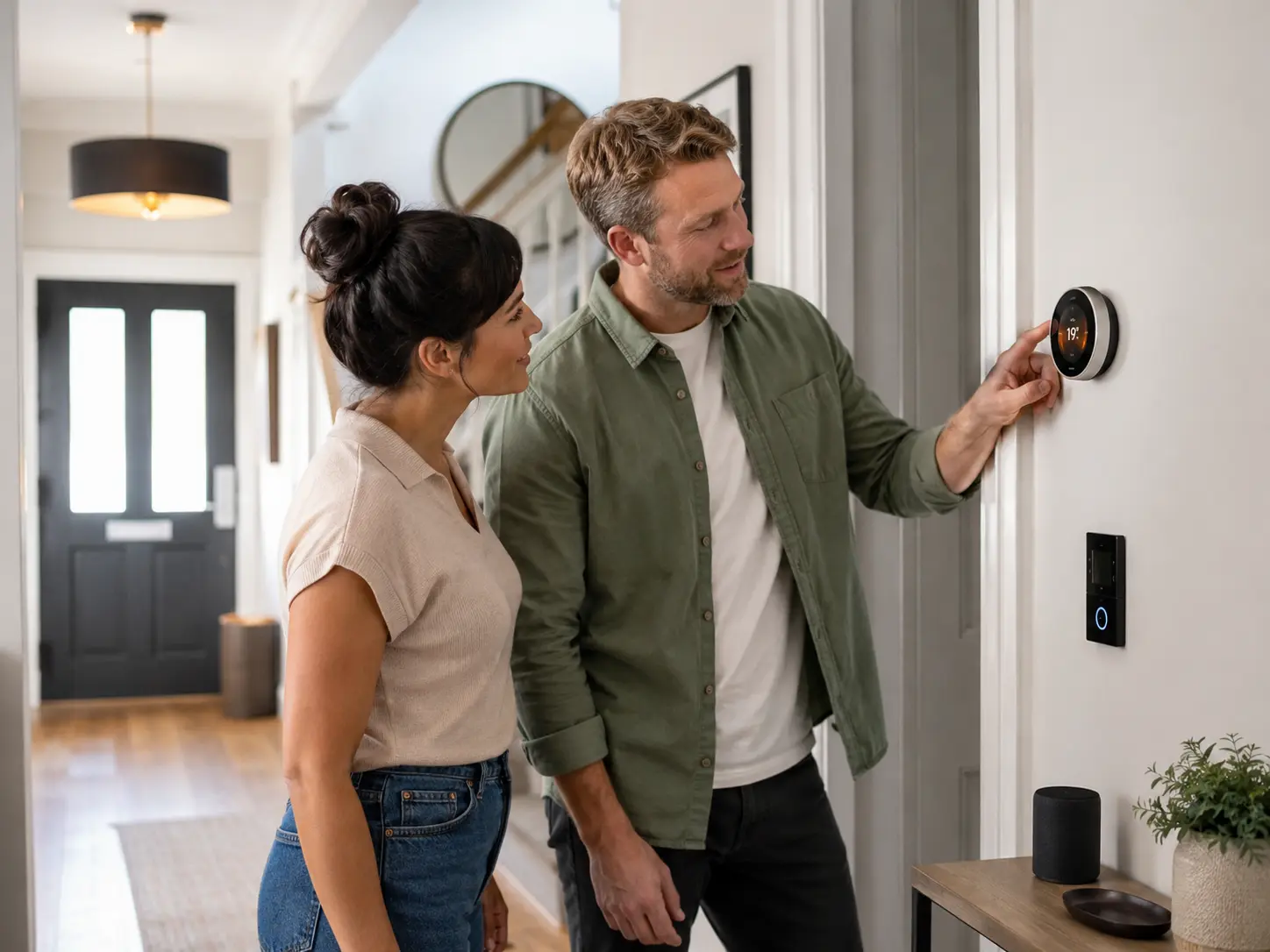
Smart home technology has moved from novelty to genuine utility. Smart thermostats, controlled lighting, and integrated security systems can reduce energy bills, improve comfort, and increase peace of mind. But the market is fragmented and the technology changes rapidly. Here is how to build a smart home that actually works for you.
Need a tradesperson for this?
Bizzy Day lets you search available UK tradespeople by trade, postcode, and date — free, no account needed.
Find a tradesperson — freeStart with smart heating
Smart thermostats — such as Nest, Hive, Honeywell Evohome, and Drayton Wiser — deliver the clearest and most measurable financial benefit of any smart home upgrade. They learn your habits, allow remote control via a smartphone, and can be integrated with geofencing (heating comes on as you approach home). Independent studies suggest savings of 10-25% on heating bills compared to basic timer controls.
Smart lighting
Smart lighting systems — Philips Hue, LIFX, and others — offer convenience, ambience control, and modest energy savings through scheduling and automation. The most practical configurations use smart bulbs for common areas and smart switches (which work with existing bulbs) for areas where frequent bulb changes are impractical. Ensure your chosen ecosystem works with your existing voice assistant (Alexa, Google Home, Siri).
Choosing an ecosystem
The biggest risk in smart home technology is backing the wrong ecosystem and finding that devices do not talk to each other. Major ecosystems include Amazon Alexa, Google Home, and Apple HomeKit. The newer Matter standard is designed to make devices cross-compatible — choose Matter-compatible devices where possible to future-proof your investment.
The most common smart home mistake is buying devices impulsively and then discovering they do not integrate with the rest of the system. Plan your ecosystem first.
— Which? Technology
Smart security
Smart doorbells (Ring, Nest, Arlo), external cameras, smart locks, and alarm systems all add genuine security value. Video doorbells with cloud storage provide evidence in the event of an incident and act as a deterrent. When choosing cameras, check the data storage model — cloud subscriptions add ongoing cost. Local storage (NAS or SD card) avoids this but requires more setup.