
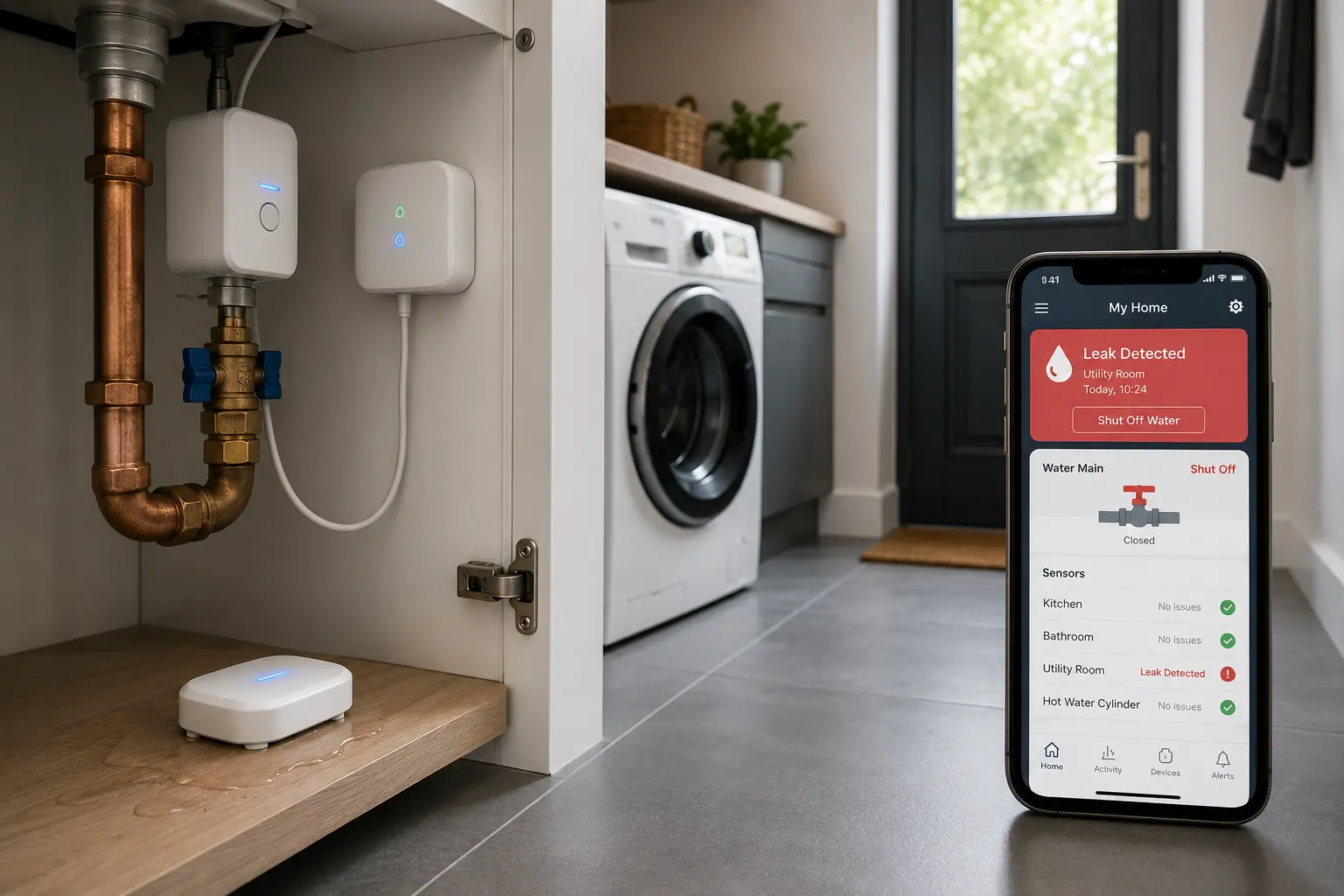
Water damage is one of the most common and costly forms of home damage in the UK — caused by burst pipes, boiler leaks, washing machine failures, and roof ingress. Smart leak detection systems can identify a leak within seconds and automatically shut off the water supply before significant damage occurs.
Need a tradesperson for this?
Bizzy Day lets you search available UK tradespeople by trade, postcode, and date — free, no account needed.
Find a tradesperson — freeHow smart leak detection works
Smart water sensors placed under sinks, behind appliances, and near boilers detect the presence of water and alert you via a smartphone app. More sophisticated systems monitor water flow through a smart valve fitted to the mains supply — detecting abnormal flow patterns that suggest a leak (even a slow one) and shutting off the supply automatically. Some systems can distinguish between normal usage and a leak based on flow rate, duration, and time of day.
Point sensors vs whole-home systems
Point sensors (such as those from Govee, Aqara, or Fibaro) detect water at a specific location and alert you, but take no action. Whole-home systems (such as Grohe Sense Guard, Phyn, or Honeywell Lyric) fit to the mains supply, monitor total water usage, and can automatically shut off the supply — protecting you even when you are away. For holiday homes or investment properties, an automatic shut-off system is particularly valuable.
Water damage claims are among the most common and most expensive home insurance claims. A smart leak detection system with automatic shut-off can prevent a minor leak from becoming a major loss.
— Association of British Insurers
Key sensors to place
High-value locations for water sensors include: under the kitchen sink; behind the washing machine and dishwasher; under the boiler and hot water cylinder; in the loft near cold water tanks; under the bathroom basin and behind the toilet; and in the airing cupboard. Each sensor should be placed in a position where water would pool before reaching a drain.
Tell your insurer
Some home insurers offer premium discounts for homes fitted with smart leak detection systems. Even if your insurer does not currently offer a discount, notify them in writing — it demonstrates prudent risk management and may be relevant if you ever need to make a claim.