
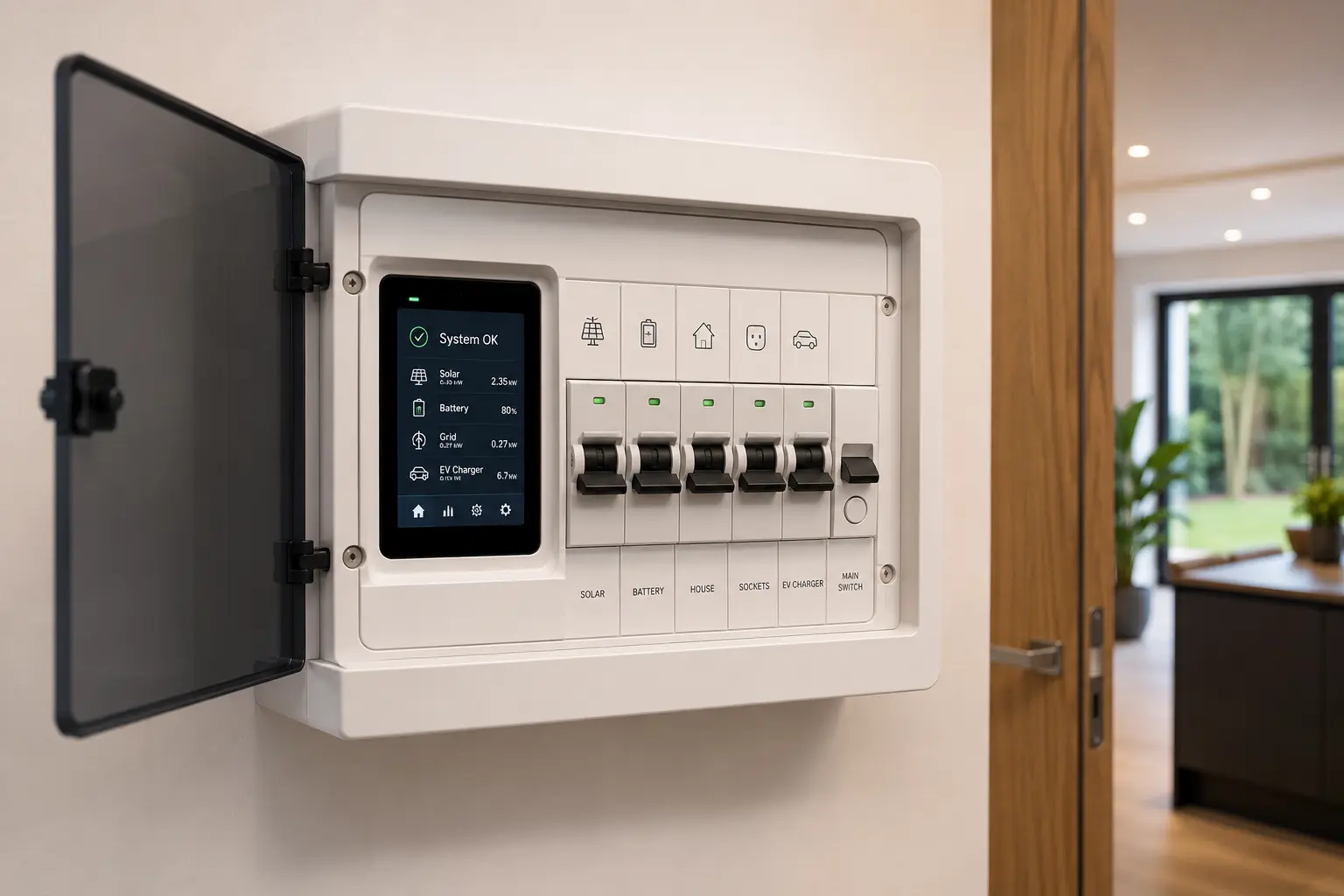
The traditional fuse box — or consumer unit — has barely changed for decades. But as homes become more energy-complex, with solar panels, battery storage, EV chargers, and heat pumps all competing for electrical capacity, a new generation of smart consumer units is beginning to emerge. Here is what is available and what it means for homeowners.
Need a tradesperson for this?
Bizzy Day lets you search available UK tradespeople by trade, postcode, and date — free, no account needed.
Find a tradesperson — freeWhat is wrong with a traditional consumer unit?
A standard consumer unit simply distributes power to circuits and provides overcurrent protection via MCBs (miniature circuit breakers) or RCDs. It has no intelligence — it cannot tell you which circuits are drawing how much power, cannot automatically shed load when demand exceeds supply, and cannot communicate with your solar inverter, battery, or EV charger.
What smart panels offer
Smart consumer units — from manufacturers including Hager, Schneider Electric, and specialist home energy companies — add circuit-level monitoring (so you can see exactly what each circuit is using), remote control of individual circuits, automatic load management (prioritising EV charging when solar is generating, for example), and integration with home energy management systems.
As homes take on more electrical loads — EV chargers, heat pumps, batteries, and solar — the ability to manage them intelligently becomes as important as the capacity to supply them.
— NICEIC
Current UK market options
The UK market for intelligent consumer units is still developing. The most mature options come from energy management systems such as Zappi/Eddi (myenergi), Givenergy, and Solis, which manage solar, battery, and EV charging intelligently but work alongside a conventional consumer unit rather than replacing it. Full smart panels — replacing the consumer unit entirely — are more established in the US but are beginning to reach the UK market.
Plan your electrical infrastructure holistically
If you are planning any combination of solar, battery, EV charging, heat pump, or underfloor heating, discuss the full picture with an electrical engineer before any individual installation. Piecemeal additions to an ageing consumer unit is an increasingly common — and expensive — problem to fix retrospectively.