
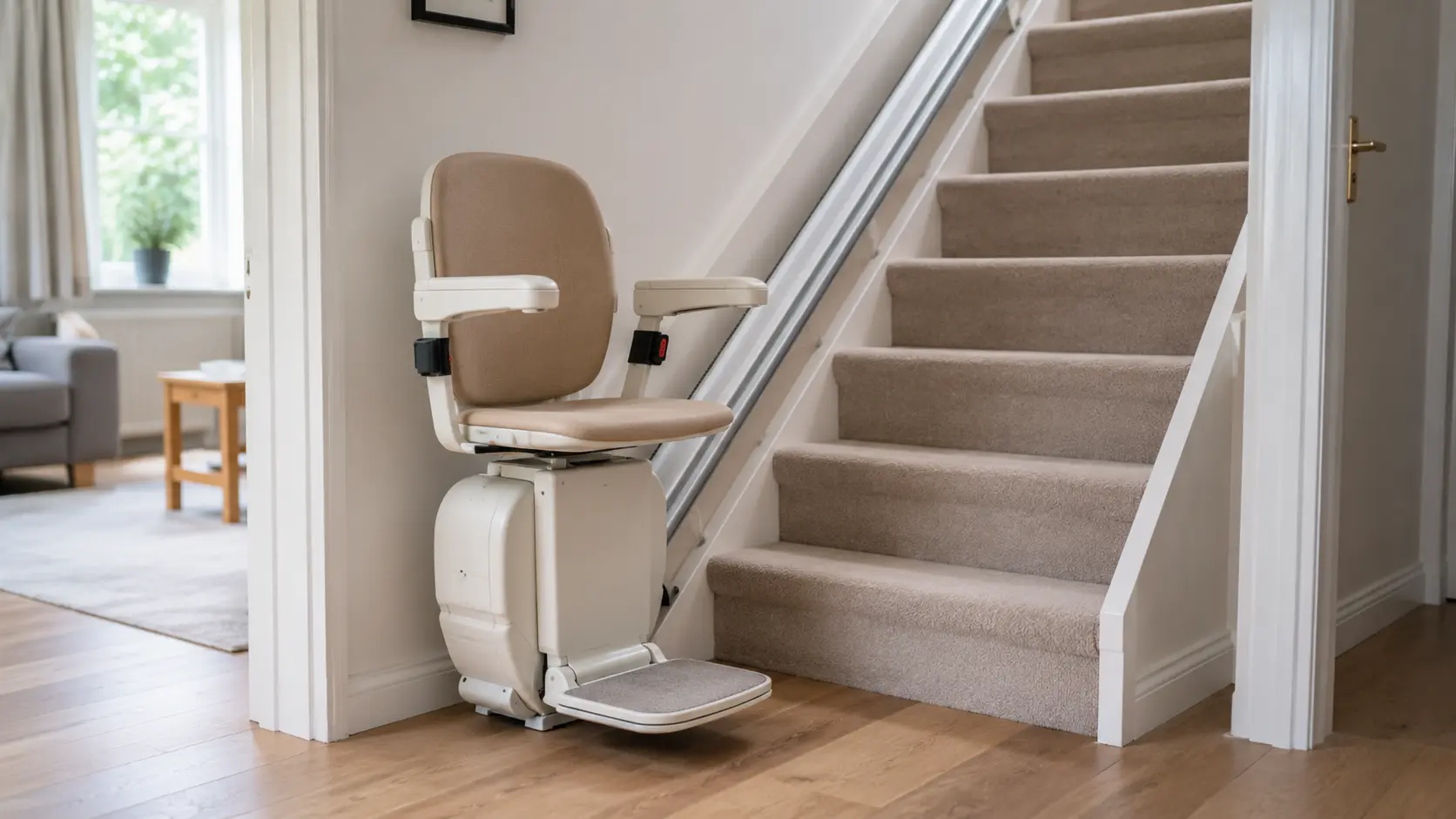
A stairlift can transform life for someone who struggles with stairs — giving them access to all floors of their home and reducing the case for moving to a single-storey property or care home. But the stairlift market has a poor reputation for high-pressure sales and overpricing. This guide helps you buy sensibly.
Need a tradesperson for this?
Bizzy Day lets you search available UK tradespeople by trade, postcode, and date — free, no account needed.
Find a tradesperson — freeStraight vs curved stairlifts
A straight stairlift — for a simple straight staircase — is significantly cheaper and faster to install than a curved stairlift, which must be custom manufactured to match the exact curve and angle of a non-standard staircase. Straight stairlifts can typically be installed within a few days of ordering. Curved stairlifts take 4-8 weeks as the rail must be fabricated to measure. The cost difference is substantial: a straight stairlift costs £1,500-£3,500; a curved stairlift typically costs £5,000-£12,000 or more.
New vs reconditioned
Reconditioned stairlifts — units removed from other properties and professionally serviced — offer a significantly lower entry price. A reconditioned straight stairlift can cost £800-£1,500, compared to £1,500-£3,500 new. The trade-off is a shorter warranty (typically 6-12 months vs 2 years for new) and a rail that may need adapting to fit your staircase. Curved reconditioned stairlifts are rarely cost-effective because the rail is specific to another staircase.
Many consumers overpay for stairlifts because they feel they have no time to compare — they need the product quickly following a hospital discharge or a fall. Getting three quotes, even briefly, can save thousands of pounds.
— Which?
Grants and financial assistance
Local authorities can provide Disabled Facilities Grants (DFGs) to eligible homeowners and tenants in England, covering the cost of adaptations including stairlifts. The grant covers up to £30,000 of adaptation costs. Eligibility is based on need (assessed by an occupational therapist) and means (financial assessment may apply). Application is made through the local council housing department. The Foundations Independent Living Trust also administers Home Improvement Agency support in many areas.
Choosing a reliable supplier
The stairlift industry has significant variation in quality and business practice. Key factors: choose a member of the British Healthcare Trades Association (BHTA), which requires members to adhere to a code of practice; get at least two to three quotes; be wary of time-limited discounts or high-pressure selling techniques; confirm the warranty terms in writing; and ask specifically what happens if the company ceases trading (a relevant concern for a product that may need servicing for 10-15 years). Major brands include Acorn, Stannah, and Brooks Stairlifts.
- Straight staircases: straight lift, quick install, significantly cheaper
- Curved staircases: custom fabricated rail, 4-8 week lead time, higher cost
- Apply for a Disabled Facilities Grant via your local council
- Choose a BHTA-member supplier
- Get at least 2-3 quotes — prices vary significantly for the same product
- Confirm warranty terms and ongoing service availability in writing