
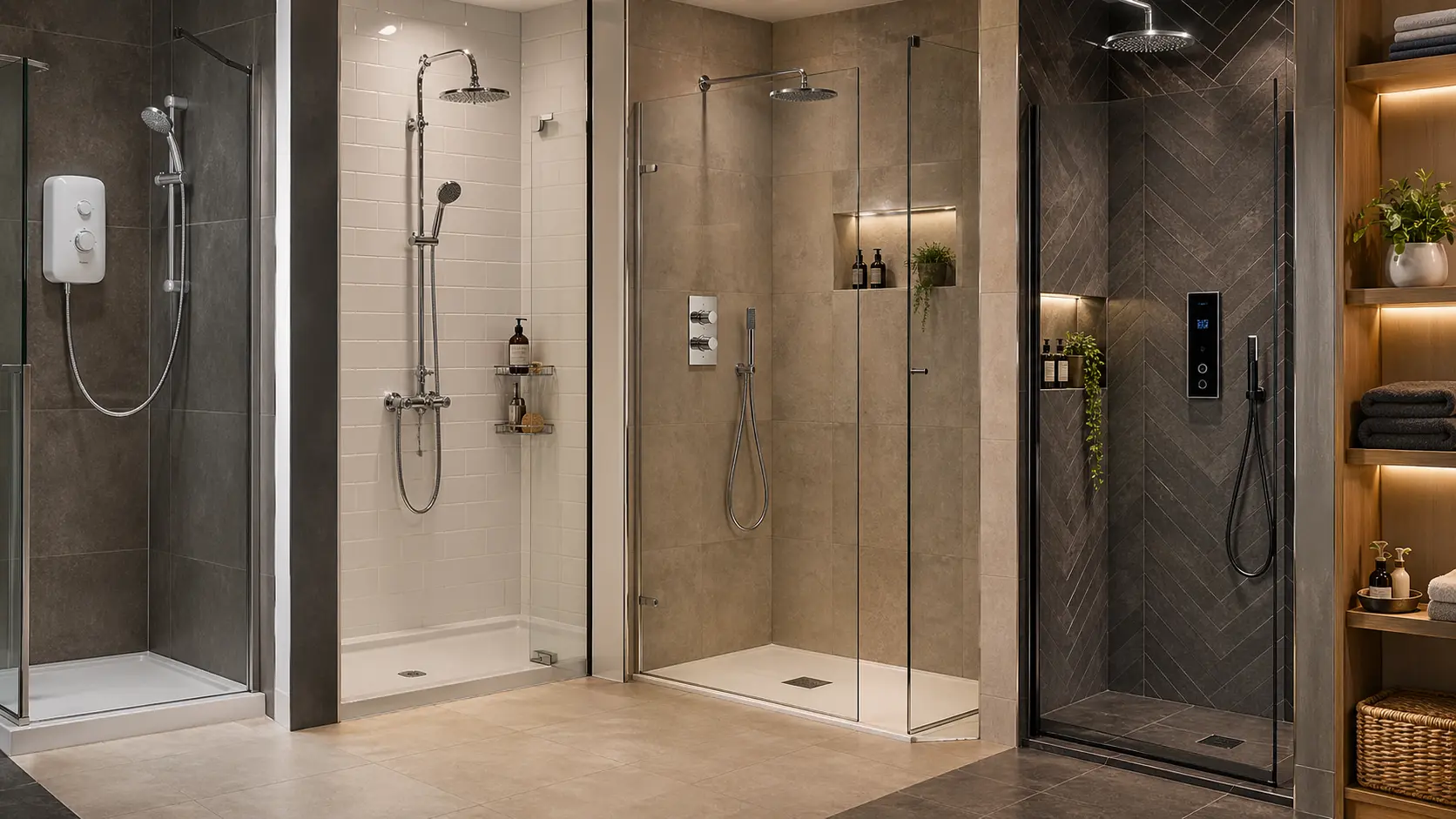
Choosing a shower involves far more than picking a head and a tray. The type of shower you can fit depends on your hot water system, water pressure, and how much you want to spend. Getting the wrong type can mean inadequate flow, scalding risks, or expensive remedial work.
Need a tradesperson for this?
Bizzy Day lets you search available UK tradespeople by trade, postcode, and date — free, no account needed.
Find a tradesperson — freeElectric showers
An electric shower heats cold water on demand using an electric element — so it works regardless of your hot water system (ideal for homes with combi boilers where hot water capacity is limited, or homes with poor hot water pressure). The disadvantage is that higher flow rates require higher wattages — a 10.5kW shower on a thin cable is a fire risk. Ensure a dedicated circuit is run by a registered electrician.
Mixer showers
A mixer shower blends hot and cold water from the existing supply — similar to a bath tap but with a shower head. They work best in homes with a well-balanced hot and cold supply at adequate pressure. Thermostatic mixer showers are strongly recommended over manual ones — a thermostatic valve maintains a set temperature even if someone runs a tap elsewhere in the house, preventing the risk of scalding.
Power showers
A power shower uses a pump to boost water flow — suitable for homes with low water pressure (typically those with a gravity-fed system from a cold water tank). They require both hot and cold supplies and cannot be used with combi boilers (which are already pressurised). Power showers use a significant amount of hot water and are not suitable for small hot water cylinders.
Thermostatic showers are now considered essential in family homes. The safety benefit — prevention of scalding — is significant, and the improvement in user experience is immediate.
— Bathroom Manufacturers Association
Digital and smart showers
Digital showers use electronic controls — either a remote handset on the wall or a smartphone app — to set temperature and flow precisely. Smart showers (such as Aqualisa or Mira) can pre-set personalised temperatures, be started remotely, and integrate with smart home systems. They require a compatible water system (most work with combination boilers or pressurised unvented cylinders) and a wireless controller.