
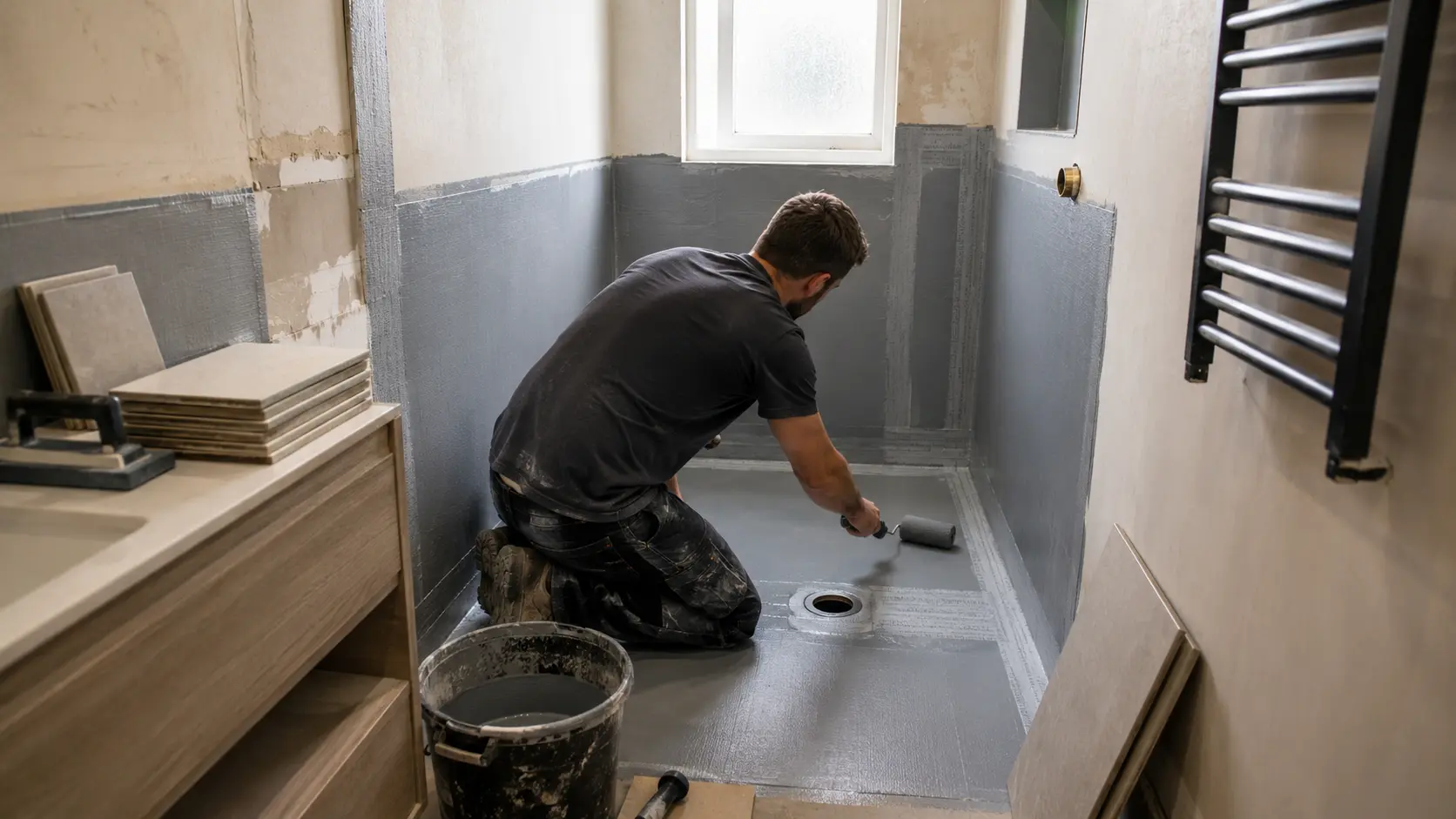
Tanking is the process of applying a waterproof membrane or slurry to bathroom walls and floors before tiling. It prevents water from penetrating behind tiles and into the substrate — which leads to damp, structural damage, mould, and ultimately tile failure. It is one of the most important and frequently skimped-on stages of any bathroom renovation.
Need a tradesperson for this?
Bizzy Day lets you search available UK tradespeople by trade, postcode, and date — free, no account needed.
Find a tradesperson — freeWhen is tanking required?
All shower areas — walls and floor — should be tanked, regardless of whether a shower tray or wet room format is used. Walls behind a bath should also be tanked to the full height of any splashing. In wet rooms (walk-in showers with a drained floor), the entire floor and lower walls must be tanked to form a fully waterproof system. Above-bath areas without a shower are lower risk but still benefit from waterproofing.
Types of tanking system
The main tanking options are: liquid applied membranes (brush or roll-on) — such as Schluter Kerdi, BAL Tank-It, or Aquabits — quick to apply and compatible with most substrates; tanking boards — rigid cement boards such as Wedi or Schluter Ditra — that form both a substrate and a waterproof layer; and waterproof sheet membranes — applied under screed in wet room floors. Each has different suitability depending on the substrate and format.
Tile adhesive is not a waterproofer. Tiles are not waterproof. Grout is not waterproof. The only thing that keeps water out of your wall structure is a correctly applied tanking membrane behind the tiles.
— Tile Association
Common mistakes
The most common mistakes in bathroom tanking are: insufficient coverage (particularly in corners and around pipe penetrations); failure to use corner tape or reinforcing fabric in internal corners (which are the most vulnerable points); applying tiles before the membrane is fully cured; and using the wrong membrane for the substrate (some membranes are not suitable for plasterboard or timber substrates without a primer). Always read the manufacturer's system instructions.
Specify tanking explicitly with your bathroom fitter
Some bathroom fitters treat tanking as an optional extra; others include it as standard. Specify in writing that the shower area must be fully tanked to the manufacturer's specification before tiling begins, and ask to inspect the work before tiles are applied. This protects you from the most common cause of bathroom tile failure.