
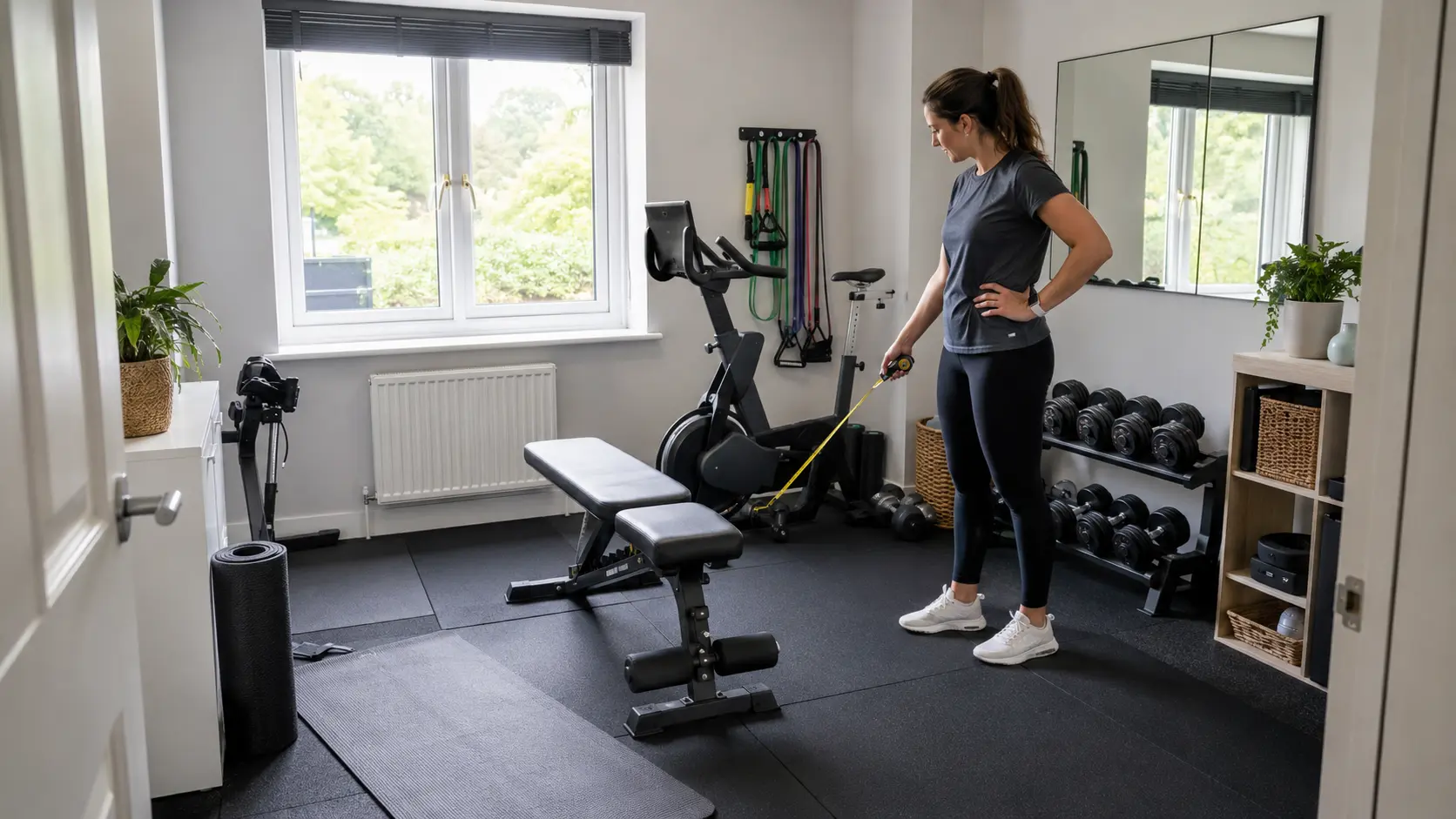
A home gym removes the commute to a commercial gym, offers 24/7 access, and over 5-10 years typically costs less than an ongoing membership. But the planning matters — poor flooring leads to damage and injury, poor ventilation creates a miserable environment, and poorly loaded floors can cause structural problems.
Need a tradesperson for this?
Bizzy Day lets you search available UK tradespeople by trade, postcode, and date — free, no account needed.
Find a tradesperson — freeChoosing the right space
Spare bedrooms, converted garages, basements, and garden rooms are the most common home gym locations. A garage or basement is ideal — they are typically accessible from outside (so you do not trail sweat through the house), have concrete floors (which handle weight better than timber joists), and are sufficiently separate from living areas that noise is not an issue. A spare bedroom works for lighter equipment but has floor loading and noise limitations.
Floor loading: the critical calculation
Standard residential timber floors are designed for 1.5 kN/m² (approximately 150kg per square metre). A power rack, barbell, and heavy plates in a small area can easily exceed this. If you are placing heavy equipment on a first-floor timber-joisted room, get structural advice before buying the equipment. Ground floors and concrete are far more suitable for heavy equipment.
Gym flooring
Rubber gym flooring — interlocking tiles or rolls — is essential. It protects the structural floor, reduces noise and vibration transmission, provides grip, and cushions any dropped weights. Standard 15mm rubber tiles are suitable for most uses; 20mm or thicker is preferable under power racks and heavy lifting areas. On wooden floors, add a layer of 18mm plywood under the rubber tiles to distribute load more evenly.
Ventilation and environment
A poorly ventilated gym becomes unbearable very quickly. Ensure adequate ventilation — an openable window is the minimum, and a dedicated extract fan helps manage humidity. For enclosed spaces like basements or converted garages, an MVHR (Mechanical Ventilation with Heat Recovery) unit maintains air quality without significant heat loss. Insulation matters too — both for temperature comfort and for preventing condensation on cold surfaces.
Mirrored walls make any gym feel bigger
Full-height mirrored walls on one or two sides are a practical gym upgrade — they allow you to check form, make the space feel much larger, and reflect light. Mirror tiles from gym suppliers are cheaper than bespoke glass mirrors and can be fitted by a competent DIYer.