
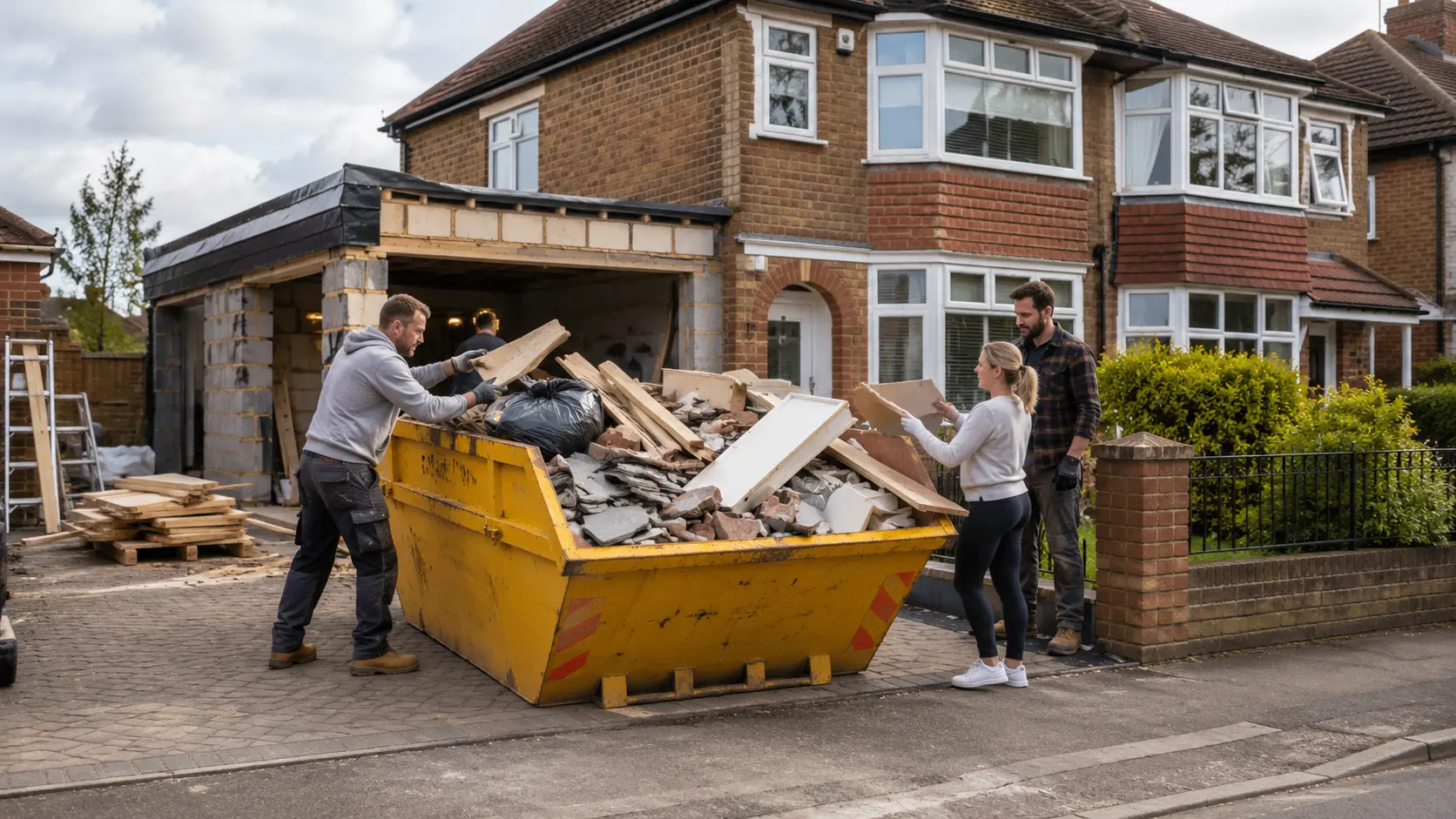
Skip hire is one of those services that seems simple until you try to organise it. The wrong size costs you money. A skip on a public road without a permit earns you a fine. Certain materials cannot go in at all. Here is everything you need to know to hire a skip without hassle.
Need a tradesperson for this?
Bizzy Day lets you search available UK tradespeople by trade, postcode, and date — free, no account needed.
Find a tradesperson — freeSkip sizes and what they hold
Skips are measured in cubic yards. A mini skip (2-3 yards) holds roughly 25-35 bin bags — useful for a small bathroom clearance or garden tidy. A midi skip (4 yards) holds 40-50 bags and suits a single room renovation. A builder's skip (6-8 yards) is the most common choice for renovation work, holding 60-80 bags of mixed debris. Larger roll-on roll-off skips (10-40 yards) are used on major construction sites and require more space for delivery and collection.
Costs
A mini skip typically costs £80-£150 to hire for 7-14 days. A midi skip runs £120-£200. A builder's skip is typically £150-£280. Prices vary significantly by region — London and the south east are at the top of that range. Most companies include delivery, collection, and disposal in the quoted price, but always confirm what is included. Extending the hire period typically costs £15-£30 per week.
Skip permits for the public highway
If the skip will be placed on a public road, pavement, or footway, you need a permit from your local council. Most skip hire companies will arrange this on your behalf for an additional fee of £20-£60. The permit requires the skip to be lit at night (with warning lamps front and rear), positioned with safety cones, and clearly marked with the hire company's details. Placing a skip on the road without a permit can result in a fixed penalty notice for the owner.
A skip placed without a permit on a public highway is the skip owner's legal responsibility — not the hire company's. Always confirm who is obtaining the permit before the skip is delivered.
— Federation of Master Builders
What you cannot put in a skip
Hazardous materials are prohibited in standard skips. These include: asbestos (requires specialist removal and disposal), fridges and freezers (contain refrigerant gases), TVs and monitors (classified as WEEE), car tyres (recycled separately), paint tins containing liquid paint, chemical waste and solvents, and gas cylinders. Most skip companies will also refuse plasterboard in mixed skips — it produces hydrogen sulphide gas in landfill — though specialist plasterboard-only skips are available.
Separate plasterboard from other waste
Plasterboard (gypsum board) cannot go in a general waste skip — it must be separated. Many skip hire companies offer a dedicated plasterboard-only skip or can arrange separate collection. Mixing plasterboard with wet waste in landfill creates a toxic gas hazard, which is why the restriction exists.
- Measure your waste volume before ordering — oversizing is costly
- Book 48-72 hours in advance for standard delivery
- Confirm permit arrangement if the skip goes on the road
- Ask specifically about plasterboard and paint disposal
- Compare like-for-like: some quotes include disposal, some do not